
For the Mentors
Bone Life believes the domino table can do what lectures often cannot. It can bring people together, open conversations, teach patience, build respect, and give young people a place to belong without feeling like they are being preached to or worked on.
This page is for the people willing to sit at that table. Some of you are domino players who want to help preserve the game by teaching it to the next generation. Others are already working with youth and looking for a different way to reach them — something natural, familiar, and built around time spent together.
Dominoes has always carried its own language of mentorship. Through the game, young people can learn how to think, listen, compete, lose, adjust, laugh, and come back to the table. Bone Life is here to help more mentors set that table and keep it alive.
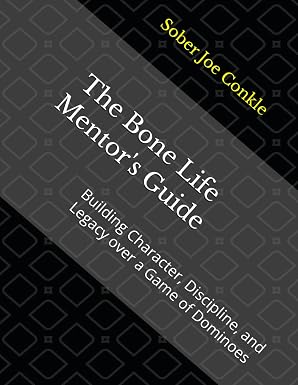
Image with text
The Bone Life Mentor’s Guide was created for the people willing to help young players find their place at the domino table. It offers encouragement, structure, and practical guidance for adults who want to use the game to teach patience, respect, strategy, conversation, and connection — without turning the table into another lecture.
Many Mentors, One Table
Mentors can come from anywhere. Some are teachers, coaches, youth advocates, church leaders, barbershop owners, detention center workers, community organizers, grandparents, parents, or experienced domino players who simply know what the game has meant in their own life. Bone Life does not believe mentorship has to look the same in every place — it only needs someone willing to open the table.
Some mentors will come to the table through the game itself. They may want to help young people learn dominoes, preserve the traditions, build better players, start clubs, or create stronger competition for the future. Others may come from youth programs already working to keep young people away from crime, violence, isolation, or negative influences.
Either way, the table can serve both purposes. For some youth, it becomes an activity, a skill, a tradition, or a competitive path. For others, it becomes a safe place to sit down without pressure, sermons, or judgment. Bone Life believes that when young people are given room to play, think, talk, and return to the table, mentorship can begin to build naturally.
For the Domino Players
Domino players understand something that cannot always be explained from the outside. The table has its own rhythm, its own language, its own respect, and its own way of teaching. If you grew up around the game, learned from older players, or earned your place one hand at a time, then you already carry something worth passing forward.
Bone Life is calling on players who want to help preserve dominoes by teaching the next generation how to play, how to think, how to count, how to compete, and how to respect the table. This is not just about showing a young person how to match bones. It is about helping them understand the traditions, the discipline, the patience, and the pride that come with the game.
Every generation of players learned because somebody let them sit close enough to watch, ask questions, make mistakes, and eventually play. Now it is our turn to make room at the table.
For the Youth Mentors
Youth mentors already know that reaching young people is not always about saying more. Sometimes it is about creating the right space — a place where a young person can sit down, relax, think, laugh, compete, and be seen without feeling like every moment is another lecture, warning, sermon, or correction.
Dominoes offers that kind of space. Whether you work in a school, church youth group, detention center, community program, violence-prevention effort, mentoring circle, or neighborhood outreach, the game can give young people something real to do with their hands and minds while trust has time to grow.
At the table, mentorship does not have to be forced. Conversations can begin naturally between plays. Lessons can show up through decisions, mistakes, wins, losses, patience, and respect. Bone Life believes dominoes can become a bridge for mentors who are looking for a way to reach youth without making them feel like a project.
Not Another Lecture, Sermon, or Councelling Session
A lot of young people have already heard plenty of lectures, warnings, sermons, and corrections. Some of it may be needed, but that does not mean it always reaches them. Bone Life believes the domino table can offer something different — a place where a young person can sit down without feeling like the whole purpose is to fix them.
At the table, the first obligation is simple: play the game. Match the bones, count the points, pay attention, wait your turn, take the win, take the loss, and come back for the next hand. That kind of space can lower defenses because the lesson is not always spoken out loud. Sometimes it is built into the rhythm of the game.
This does not replace serious mentorship, counseling, discipline, or guidance where those things are needed. It simply gives mentors another doorway. Dominoes creates room for conversation, trust, respect, and correction to grow naturally over time — not because a young person was forced into a lesson, but because they kept coming back to the table.
The Natural Language of the Bones
Dominoes has a way of teaching without announcing that a lesson is being taught. The game speaks through turns, points, patience, timing, mistakes, strategy, and the quiet pressure of making the next right play. A young person may think they are only playing a game, but the table is also teaching them how to slow down, pay attention, think ahead, and respect the people sitting across from them.
The language of dominoes is natural because it does not have to be forced. A mentor can ask, “Why did you play that bone?” or “What did you see?” and suddenly the conversation moves into decision-making, focus, accountability, confidence, and growth. The lesson comes through the play, not over the top of it.
That is why Bone Life believes dominoes belongs in mentorship spaces. The game gives adults and young people something shared to focus on, while trust, conversation, correction, and encouragement build over time. At the right table, mentorship does not have to be pushed — it starts to speak for itself.
How Trust Builds Over Time
Trust rarely shows up all at once. It builds through small moments repeated over time — sitting at the same table, playing another hand, laughing after a mistake, asking a simple question, or watching how someone handles a win or a loss. Dominoes gives mentors and young people a reason to keep coming back without forcing the relationship too soon.
At first, the conversation may only be about the game. What bone should be played? Who is keeping score? Why did that move work? But over time, those small table conversations can become bigger conversations about choices, patience, respect, responsibility, and life away from the table.
Bone Life believes that mentorship grows strongest when it is not rushed. The table gives trust room to breathe. A young person may come for the game first, but if the table is steady, respectful, and open, they may eventually find something more — connection, guidance, confidence, and a place where they feel welcome enough to return.
It Starts With Just One Table
You do not need a full program, a large budget, or a perfect plan to begin. Sometimes mentorship starts with one table, one set of dominoes, one dependable adult, and a few young people willing to sit down and learn. That is enough to create the first opening.
One table can become a regular gathering. A regular gathering can become a club. A club can become a school program, church league, neighborhood circle, barbershop table, or community event. Bone Life believes the most important step is not making it big at first — it is making it real, steady, and welcoming.
Start where you are. Use the space you have. Invite the young people who are within reach. If the table is open, respectful, and consistent, the game can begin doing what it has always done: bring people together, teach through play, and give the next generation a reason to come back.
Where The Table Can Live
A domino table can live almost anywhere people are willing to make room for it. It can start in a classroom, church basement, barbershop, community center, recreation room, after-school program, detention center, neighborhood event, family gathering, or youth outreach space. The location does not have to be fancy — it just has to be steady, safe, and open.
Some tables may be built around teaching the game, preserving domino culture, forming clubs, or helping young players become stronger competitors. Other tables may serve young people who need a place to sit down, reset, and experience something positive without pressure. In both cases, dominoes gives mentors a simple activity that can carry deeper value over time.
Bone Life believes every community already has places where a table could begin. The work starts by finding those spaces, inviting the right people, and giving young players a reason to return. One table in the right place can become the beginning of a club, a league, a tradition, or a new path forward.
From Playing to Belonging
At first, a young person may only come to the table because the game looks interesting, because a friend invited them, or because it gives them something to do. That is enough. Dominoes does not have to demand a commitment on the first day. Sometimes the first step is simply sitting down, learning the bones, and playing a hand.
Over time, playing can turn into belonging. A young player begins to recognize the faces at the table, understand the rhythm of the game, remember past hands, improve their decisions, and feel the pride that comes with getting better. The table becomes more than an activity — it becomes a place where they are expected, included, and challenged.
That sense of belonging is where clubs, leagues, traditions, and stronger communities can begin. Bone Life believes that when young people feel connected to the table, they are more likely to respect the game, listen to the mentors around them, and see themselves as part of something worth carrying forward.
The Road to Andalusia Connection
The Road to Andalusia is the larger mission behind this work. It gives the domino table a destination — not just a place to play today, but a path that can lead young players toward growth, discipline, confidence, community, and competition. For mentors, it is a reminder that one table can become part of something much bigger.
Every youth table, classroom game, church league, detention center program, barbershop circle, or community club can become one step on that road. Some young people may simply learn the game and enjoy the table. Others may grow into serious players, future mentors, or competitors who one day see Andalusia as a place worth traveling toward.
Bone Life connects mentorship to The Road to Andalusia because the mission is not only to teach dominoes, but to preserve the culture by giving the next generation a way in. When mentors help set the table, they help build the road.
Help Set The Next Table
If you are interested in starting a youth domino table in your school, church, barbershop, community center, youth program, detention center, or neighborhood space, Bone Life would like to help you think it through. Every table will look a little different depending on the people, the place, the age group, and the purpose behind it.
You may need help deciding where to begin, what kind of players to invite, how often to meet, what rules to start with, or how to keep the table respectful and consistent. Bone Life is still building this work, but the goal is to support people who are serious about using dominoes as a positive activity, a teaching tool, or a doorway to mentorship.
If you believe a domino table could help the young people in your space, reach out and start the conversation. We can talk through the idea, the setting, and the first steps toward making that table real.